

I talked about the grimness and hilarity of death and death related rituals in Romania in a previous post. But what I didn’t quite touch on was the story of the undead, or “strigoi” as we call them. Well, HAPPY to tell you I never saw one *insert LOL, triple spit and hashtag #blessed*
But hey, I heard some stories… So here I am, storyteller on duty, to let you all know about the shit I heard, read or saw on the news. Because, to this day, news bulletins are still reporting on strigoi stories. Beat that, Fox News.
Disclaimer: these are to be treated as stories. I do not have an opinion on the existence of strigoi, but I do have an opinion on Romanians’ mental health.
Why do Eastern Europeans’ minds seem to create such stories? Well, first, so many drink way too much. Second, the generational trauma is beyond belief. There is also a tendency to blame your problems on anything but yourself. Third – when you grow up under oppression regimes and scarcity, the only thing you have left is creativity, self-made entertainment, but also relying on spirituality. Maybe that’s how Romanian minds developed into the creative (possibly paranoid) treasures they are today. Blame the communists.
I don’t remember the first time I ever heard about strigoi, but most likely I was way too young to process the information correctly. I took it as real, just like we do with the news today, hah. Having been already pretty traumatized by death rituals, my anxiety took to new levels with my fresh knowledge of strigoi.
Westerners love a good vampire story, but us Romanians didn’t know much about vampires and I don’t remember learning about the word until much later when the movie Dracula came out. Instead, we got the full knowledge on strigoi. Is the strigoi the predecessor of the vampire? Let’s see.
It is said that if someone dies, maybe unexpectedly, they come back to haunt you – if they can’t reach the other world, they still hang around and act like shit-disturbers. For example, a family that has just buried their loving father, might wake up one day to find the dead guy in their kitchen, slow-mo wandering around (imagine walking dead) and asking for food. During this haunting, it’s very likely that a relative or someone from the house will fall sick and die as well. So they have to get rid of the strigoi in order to restore order, health and peace.
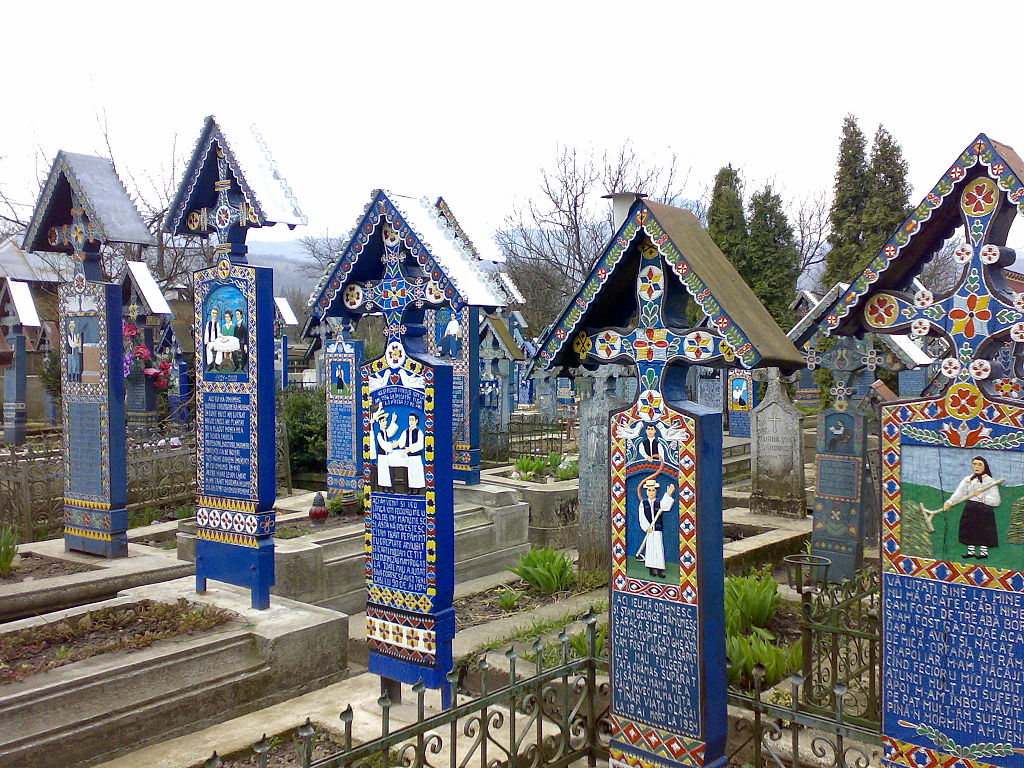
I don’t quite understand if this is the very dead and decomposing body coming out of the grave or just an apparition. Because you see, apparently if you find a hole in the tombstone, it’s clear there is a strigoi buried in there, and that’s where they can come out.
Leaving the shape shifting abilities of strigoi aside, here’s a story. This old peasant lady was interviewed in one of our weekly magazines and talked about her husband coming back to haunt her. A day after his funeral, she’s around the house and hears his voice in the yard, banging and clunking in the background. She goes out and sees the guy wearing the suit he was buried in, all pale, eyes sunken in, but instead of feet he had hooves under the pants.
He is wailing and asking for food, and she starts shooing him away, making the cross sign in the air and curse-spitting as much as she can from her old, dry mouth. Like a loving, life-long devoted wife, she’s literally yelling at him to go back to his casket. He runs away. But the next day he pops up in the yard again. This babushka from the village is not to be messed with, she starts fighting him with the broom until he leaves again. Then she calls for help. Villagers come over, and decide to go on a mission that night: go to the cemetery, dig out the guy, put a stake through his heart, take his heart out, burn it, drink the ashes, then seal the coffin and bury the dude for good. And that’s how it goes. This ritual is not a story, it’s actually a real thing that still happens nowadays, witnessed by many.
This is where the news usually start their coverage of the event. Technically, this is grave desecration. Traditionally, the babushka just needs peace of mind. Where tradition and modern law collide, you get the 5 o’ clock news. Even to this day, it’s funny to see a country part of the European Union still dealing with strigoi rituals, and where quite a few grown-ups can literally say they ate a dead man’s heart.
But wait! There’s more: there’s strigoi, but there’s also moroi. I still haven’t found a clear difference between strigoi and moroi – the two undead spirits from our Romanian folklore. To me they are both the same thing. They say that strigoi happens when someone met an unexpected or violent death or didn’t get closure in this lifetime. Maybe even got stuck on the way to the spirit world. Sometimes strigoi is just associated with maleficent spirits, like those of sorcerers, or people possessed by the devil. I believe the evil nature of it is what always sticks out – no strigoi is gonna show up at your door looking to cuddle… But they will haunt the family and cause illness, or wreak havoc where they show up.
Moroi is sometimes associated with unbaptized children who might come back to life and live amongst us. It’s said that moroi cry at night asking for their baptism. Curious who the heck came up with this story – since it seems very tied to the Christian practice of baptism. Maybe just another scare tactic popularized by the church? Get a baptism or else you become moroi? boo-hoo?!…
In Romania, the night of November 30, or St Andrew’s, is the night when the other realms open up, strigoi rise from the graves and roam the earth. It’s like Halloween – without the candy. Instead, specific rituals abound. We’ve been ingrained in the rituals from an early age and sometimes we keep doing them out of habit. What is a Romanian to do when the gates of the otherworld open and the strigoi come for the nom-noms – the cattle, the crops and the people? Good ol’ garlic to the rescue! Bread crumbs spread around the yard are also an option, said to keep the strigoi outside, eating, instead of coming in.
As weird as it sounds, unmarried girls use the St Andrew’s night opportunity to find out who their fated husband is. That night, they place holy basil under the pillow and it’s said that the man showing up in their dreams is their future husband. I smell a bit of desperation here, as marriage is such a ‘must’ in a traditional society, that girls literally will use any holiday to do some ritual that would help them find out who their husband is. Traditionally, the first holiday to do this is St John’s in June, which for Romanians coincides with the pagan tradition of the fairies or “sanziene”. This is yet another night when the skies open wide, and the worlds of the living and the dead are connecting. The fairies are said to be beautiful ladies who dance and float in the woods, away from humans. Usually they are nice and bring fertility and health, but they have an evil side. They don’t like to be seen by men, so If men happen to see them, they might be maimed, go blind or lose their mind. Pagan feminism.
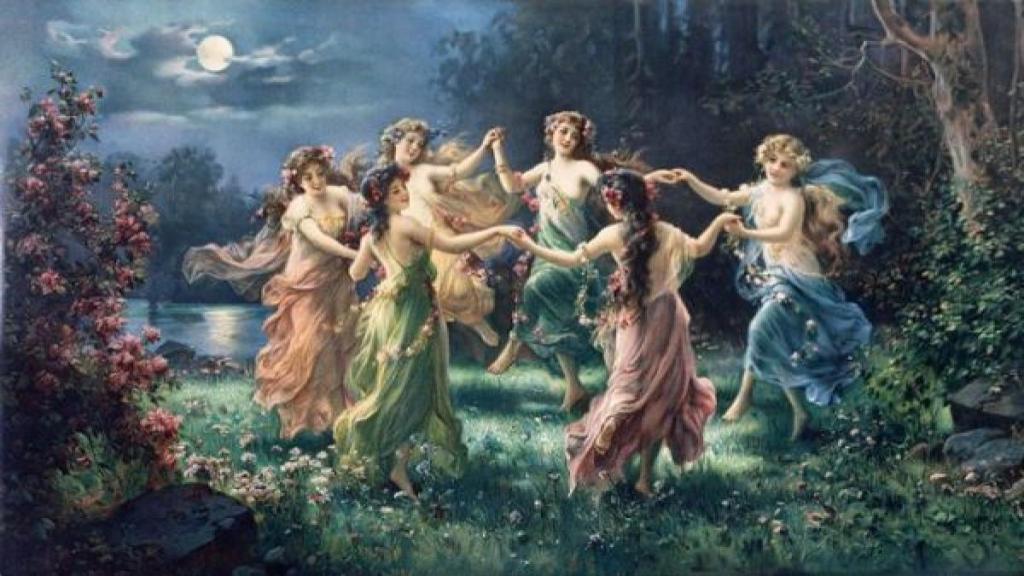
Side story, one summer in my teenage years, as I was away at a cabin with friends right on St John’s night, we decided to go look for the evil fairies in the woods at night. As we walked the pitch dark road winding through the forest, giggling and drinking, boisterously challenging the universe to show us the fairies, we saw some white apparitions in the distance, under the pale moonlight. We shit our pants for a bit, until we realized those were some stone sculptures of mushrooms, if I remember correctly.
We didn’t see any fairies, we didn’t go insane that night (debatable for some), the evil spirits didn’t get us. I also didn’t dream of my future husband that night. Maybe he saw the fairies and ran away with them. Maybe strigoi ate him.
One thing is for sure. I never heard of strigoi and moroi to feed off of the blood of people. I think vampires, as some sort of evolved strigoi, took the haunting to the next level, and now make their comeback to our world in real human bodies with an appetite. Romanians love to exploit the stories of vampires and Dracula now, but there is definitely a lot of awareness around the fantasy factor, unlike the strigoi, whose hearts have been literally cooked and served by fellow villagers. Who’s the vampire now? Maybe this is how the myth started… (you read here first)
Sleep well tonight, may strigoi never find you. 😈

 It's Okay, I'm Eastern European.