

One of the most chilling, most haunting events you can experience as a kid in Romania is death. It’s not the usual Western funeral, closed casket, privacy for the family. Aw no. It’s a degrading, money grabbing, total shit show! It’s creepy, and intrusive, and loud. But because it’s Eastern Europe after all, it’s also a rare opportunity to feast on one the best and tastiest desserts, so this whole experience ends up messing with your tiny head.
Death expands into a different dimension in Romania. In a country that was literally lacking entertainment during communism (television was running like 2 hours per week cause the fearless dictator didn’t want you too knowledgeable and informed), death and mourning become surreally captivating and much needed moments of socialization. “Why did he die? Ohh, but he was young” (about an 80 year old man). “Tz tz tz. (soft voice) Did he have children? …Are they getting his apartment?”
A lot of older people’s favorite pastime is going to the cemetery. I swear they don’t visit their own living relatives as often as they visit the dead ones. Maybe it’s their way of getting used to the imminence of their own death, as some would often go there to clean and maintain their own, pre-purchased gravesite. Preparing for death is almost a hobby.
So it happened that a lot of my childhood was spent in cemeteries, tending to my older relatives’ sinister hobbies, usually accompanying either my grandma of my aunt on short tours of all the family graves.”We have to light a candle here, and then there, and then clean that grave. Hey look, this is where I will be buried when I die”.
Not that I cared much, because my main attraction was the huge chapel vault built for a young lady who had died years before. Rumor has it she had been a teacher, and inside her chapel, if you peered through the glass, you could see these beautiful dolls and colorful teddy bears they left there as a tribute to her youth. Maaan if only I could break in and play with those. At the time, toys were boring, and there were few in stores, but if I got them, in the hands of an excited girl they’d often meet a more violent end than most of the people in the cemetery.
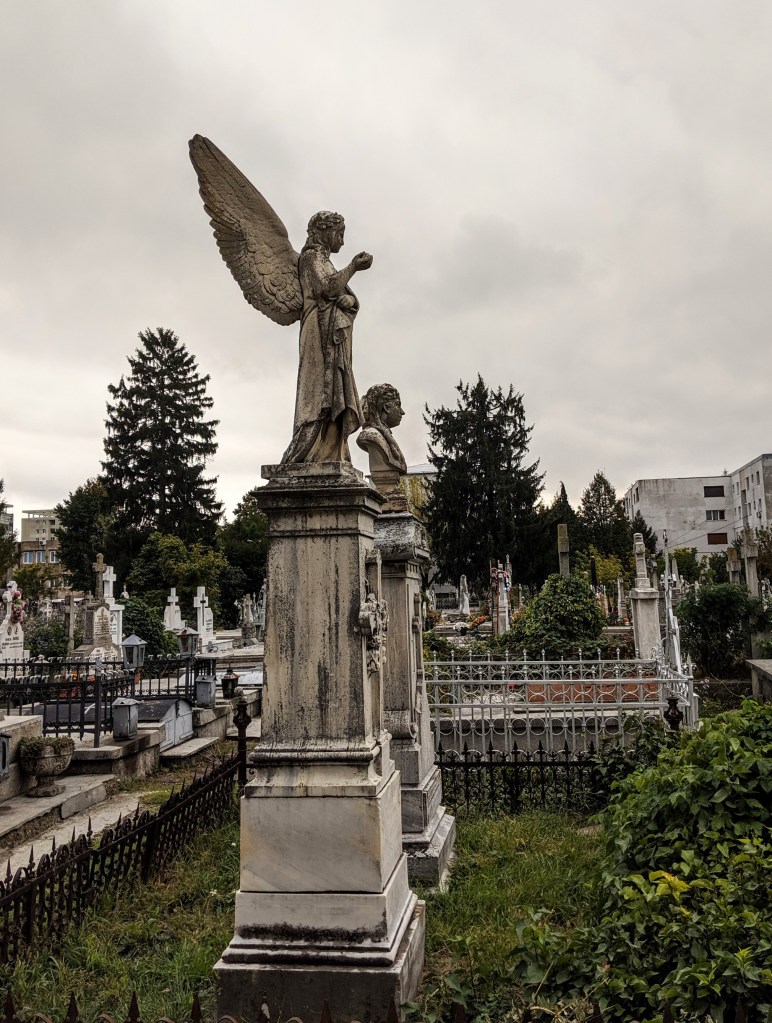
When I didn’t stick my nose against the chapel’s window, you’d most likely see me jumping over the concrete burial vaults, probably playing what Westerners call “the floor is lava”. There was no lava in my vocabulary, instead there were spooky stories about people who were buried alive, that could reach out through the ground with their bony hands and try to grab your leg.
To better understand the bony concept, one day I asked my aunt to let me go inside the cemetery church to see the fresh dead people (who were placed there for viewing for a couple days). I had never seen a dead person. So auntie swiftly grabs my hand, walks in the church with me and asks the janitor who was mopping the floors to let me in. “She wants to see the dead one” she demanded nonchalantly and the janitor had no choice but to let me in. The dead guy looked middle aged and had a horseshoe bald pattern, as I could see his head popping from the open casket. I don’t remember being impressed but the image stuck with me, enough to make me associate horseshoe bald patterns with death – even to this day.
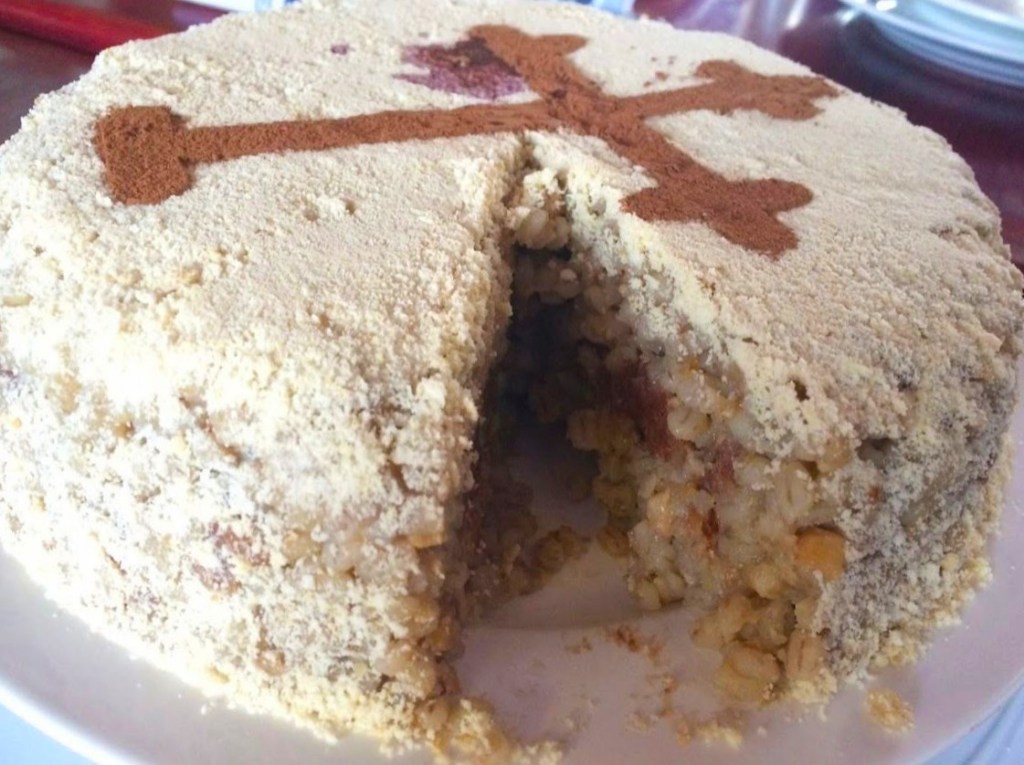
The moment to rejoice and forget about all the bald corpses was the actual funeral, or the future commemorative sermons on specific occasions. That’s when one of the best desserts in the world would be served: coliva. It’s basically a boiled wheat or barley meal, with sugar, nuts, rum and vanilla flavours, often mixed in with cocoa and colorful candy added as décor. Coliva is so intrinsically tied to death that nobody likes to make it if there’s no such reason – superstitions are another big thing in Eastern Europe – so as a kid you have to take the opportunity and stuff your face until you can’t talk anymore. Funerals – where older folks would get drunk on wine, and kids would get diabetes from coliva.
Another wise way to get candy or money was chasing funeral processions. Oh, the horror of hearing the wailing trumpets in the distance, only to realize they are slowly getting closer and closer to where you are. That’s usually a fancy funeral procession with fanfare and all, and that’s how you knew the dead guy must have been important. As they approached, you could see the open back truck, the open casket, the dead guy inside, bony hands on the chest. And then behind the carriage – a bunch of priests holding some weird religious flags, then all the people walking at a slow pace, maybe a couple even crying for real.
As a kid, although creeped out of your mind, you knew that’s another sweet-ass opportunity (not as sweet as coliva). The custom is for the procession attendees to throw coins on the ground behind the casket – this is a symbolic way of “paying the dues” for the dead guy. Guess who is there to collect all that change? Guards on duty – the wise, but poor kids on the block, and maybe a few gypsies that you had to fight. As luck would have it, sometimes you’d also get candy or truffles from the funeral procession if you looked cute and alive enough.
Some things have changed in Eastern Europe, but most of the funeral shit show is set to go on following the same script, albeit a bit shorter and with multiple revisions. The days of scary stories are behind us, but If you watch the news, you may still hear about strigoi (the undead) and people buried alive, reaching out from the dirt and digging themselves out with their bony hands. I literally woke up to similar news this morning, in January 2022, I had to check the date… so this is not an exaggeration at all. But, more on strigoi in another story…

 It's Okay, I'm Eastern European.
Great story! Interesting to read.
LikeLike
Thank you Carrie!
LikeLike